
Sealed aluminum enclosure castings
Die-cast and squeeze-cast housings for telecom, electronics and LED lighting, machined at the sealing faces and leak tested before finishing. You set the leak rate on the casting; the IP rating belongs to the assembled product.
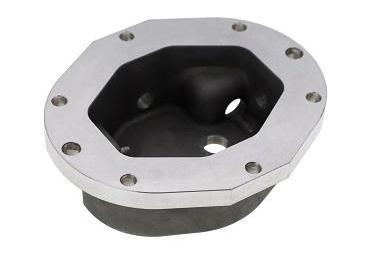
Define the sealing interfaces first
An enclosure is designed around the features that connect it to the rest of the product: gasket lands, cover joints, cable entries, mounting points and heat-transfer faces. State them on the drawing and the quote, tooling and test plan describe the same part.
| Feature | Why it matters | Information to provide |
|---|---|---|
| Gasket lands and cover joints | Define the sealing interface | Seal geometry, surface texture, flatness, fastener spacing and assembly condition |
| Cable entries and ports | Cross the sealed boundary | Thread or gland standard, machined faces, which ports are plugged during the test |
| Mounting bosses and threads | Connect the enclosure to the equipment | Fastener standard, engagement, loads and required checks |
| Heat-transfer faces | Carry heat from boards or LEDs to the housing | Contact area, flatness, coating exclusions |
| Grounding and shielding contacts | Need bare, conductive metal | Contact zones and masking; the assembly test that applies |
| Internal pockets and walls | Affect tooling access, wall transitions and leak risk | Section views, minimum clearances, wall thickness by region |
Leak rate on the casting, IP rating on the assembly
A cast housing does not carry an IP rating by itself. An enclosure rating such as IP67 depends on the assembled product: seals, openings, cable glands and the specified test. What the casting can be accepted against is a leak test on the housing, with the ports and joints sealed the way the test plan says.
Agree which of the two you are buying: a housing leak-tested to a stated medium, pressure and leak rate, or an assembly tested to an enclosure rating. Most disputes on sealed enclosures start with that line left blank.
| Field | State on the drawing or test spec |
|---|---|
| What is tested | Bare housing, housing with cover, or full assembly |
| Method | Helium leak test, water immersion, or pressure testing to a stated value |
| Medium and pressure | Test medium, test pressure and unit |
| Allowable leak rate | Value with units, or "no visible bubbles at … for …" |
| Stage | After machining, after coating, or as assembled |
| Sampling and records | 100% or a sampling plan; what each lot record shows |
Telecom enclosures and LED lighting housings
Both are sealed aluminum housings, but they are accepted on different evidence. Tell us whether the part is an indoor cover, an outdoor enclosure or a component inside a larger assembly.
| Application | Requirements to provide | Engineering review |
|---|---|---|
| Telecom enclosure: housing and cover | Gasket grooves, fastener spacing, mounting datums | Final dimensions and assembly constraints; sealing evaluated in the intended assembly condition |
| Telecom enclosure: grounding and shielding | Electrical contact zones and treatment exclusions | Contact surfaces and the applicable assembly test. A metal enclosure alone does not guarantee shielding performance. |
| LED housing: heat transfer | Heat-source location, contact area, assembly condition | Machined contact faces, flatness and coating exclusions; thermal performance validated in the finished lamp |
| LED housing: outdoor use | Gaskets, cable entry, exposure and corrosion requirements | The target enclosure requirement and test method for the assembly |
| Visible surfaces | Colour, gloss, cosmetic zones, fixing locations | Finish samples approved; surfaces where parting-line or ejector marks are acceptable defined |
Die cast or squeeze cast?
Most enclosures are thin-walled, repeat-volume parts, and die casting on 160–1,100 t machines is reviewed first. Squeeze casting on 300–1,100 t presses is compared where the housing must be T6 heat treated, welded, or has leaked as a die casting at a machined sealing face.
The quotation covers the casting and its finished interfaces: machining of gasket lands and ports on our own CNC machines, finishing with the masking you specify, and the agreed leak test.
Sample acceptance
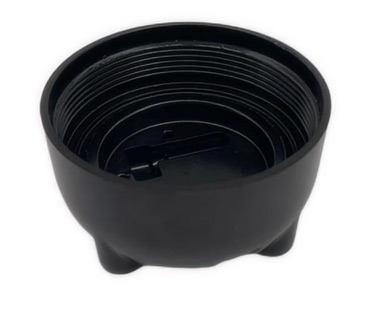
Name the mating parts used for fit checks and the reports needed for dimensional approval. Say whether leak, coating or assembly checks are part of sample approval. An approved surface sample sets appearance; it does not replace the dimensional or functional specification.
- Dimensional report on the sealing faces and mounting datums
- Leak-test record with medium, pressure, units and threshold
- X-ray images of agreed regions where porosity near a sealing face is a risk
- Coating thickness and masking check where specified
- Material certificate for the alloy used
Related guides
- Helium leak testing for aluminum castings
Helium vs pressure decay, leak-rate units and what the report must state.
- Casting porosity acceptance criteria
Zone-based acceptance for regions near sealing faces.
- Casting finish specification
Coating callouts and masking for sealing and grounding faces.
Questions engineers ask
- Can a casting be IP67 rated?
- An IP rating applies to the assembled enclosure with its gasket, fasteners and cable glands, not to the bare casting. For the casting, specify a leak rate or pressure test at a defined stage, and the flatness and finish of the sealing faces.
- When is the leak test done on an enclosure casting?
- Usually after machining and before powder coating or painting, so a coating cannot hide a leak path. The stage is stated on the drawing or in the inspection plan.
- Die casting or squeeze casting for an enclosure?
- Thin-walled telecom and LED housings in volume are usually die cast. Thick walls at machined sealing faces, or a part that keeps failing leak test as a die casting, are reviewed for squeeze casting.
- Is surface finishing done in-house?
- Tumbling, shot blasting, sandblasting, vibration tumbling, grinding, polishing and ultrasonic cleaning are in-house. Agree masking of sealing faces and threads on the drawing.
Send the enclosure drawing
Include the sealing faces, the gasket design, the finish and the leak criterion or enclosure test. Howard Ding replies with the route and the open questions.
What happens next
- Howard Ding confirms receipt and asks for anything missing from the package.
- Engineering reviews geometry, alloy and acceptance criteria and proposes a route: squeeze casting, die casting, or a reason neither fits.
- You receive the quotation with tooling, samples and validation listed separately from the part price.