
Pressure-tight casting applications
Pump and valve bodies, sealed enclosures, motor housings and structural brackets, die cast or squeeze cast, machined and tested in our own plant in Qingdao. Find your part by the test it has to pass.
Start from what the part has to prove
A pump body, an outdoor enclosure and a trailer bracket can come off the same presses. What separates them is the acceptance test, so the applications below are grouped by requirement, not by industry.
| Requirement | Typical parts | Define on the drawing | Page |
|---|---|---|---|
| Hold a medium under pressure | Pump housings, valve bodies, manifolds | Medium, working and test pressure, allowable leak rate, test stage | Pump and valve castings |
| Keep water and dust out | Telecom and electronics enclosures, LED lighting housings, covers | Leak rate or enclosure test, gasket lands, sealing faces, finish masking | Sealed enclosure castings |
| Bores and coolant passages | Motor and gearbox housings | Bore tolerances and datums, coolant passage pressure, leak rate | Motor housing castings |
| Carry load, take T6 or welding | Trailer brackets and connectors, folding parts, structural brackets | Load case, properties by section, weld requirement, validation tests | Automotive structural castings |
| Sealed, thin-walled, high volume | Die-cast housings and covers with an agreed leak test | Leak criterion, X-ray zones, machined faces that cross the pressure boundary | Leak-tested die castings |
Part families
Each page sets out the drawing data, the casting route and the tests that apply to that family.
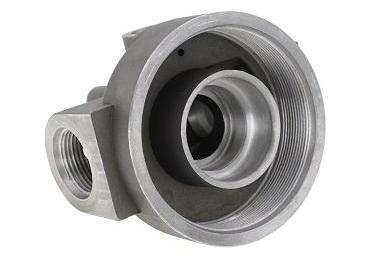
Pump and valve castings
Define: medium · test pressure · leak rate
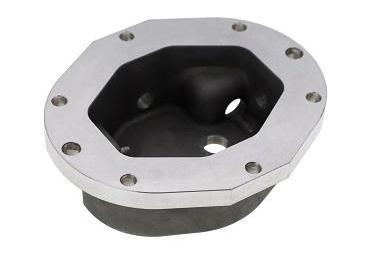
Sealed enclosure castings
Define: leak rate or enclosure test · sealing faces
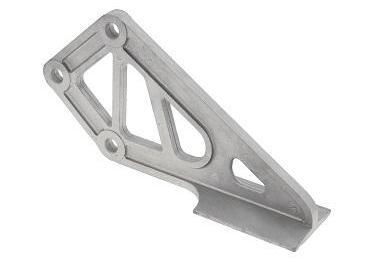
Automotive structural castings
Define: load case · properties by section · welding
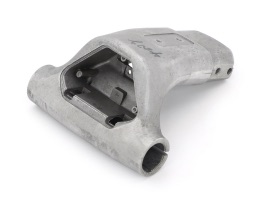
Leak-tested die castings
Define: leak criterion · X-ray zones · machined faces
Motor housing castings Parts gallery Case studies
Industries we supply
Production goes mainly to customers in North America and Europe, with further customers in South America, Australia and Japan. The industry name does not decide the casting process; the part's function, geometry and the evidence it needs do.
| Industry | What is usually specified |
|---|---|
| Automotive and transport | Structural and housing parts where weight, stiffness and repeatability matter; lightweighting against steel or forged originals |
| Fluid control | Pressure-containing parts where internal soundness and leak-tightness are the acceptance criteria |
| Industrial machinery | Bearing and gearbox housings, covers and brackets with machined interfaces, at moderate to high volume |
| Telecommunications | Enclosures with sealing, grounding, finishing and cosmetic requirements |
| LED lighting | Housings where heat transfer, thin walls and surface finish drive the design |
Machinery castings: review them as part of the assembly
Share the mounting arrangement, loads, vibration, duty cycle and maintenance environment with the drawing. For replacement parts, send the current drawing revision and mating dimensions; a worn sample may not represent the original part.
| Part | Requirements to provide | What engineering reviews |
|---|---|---|
| Bearing and gearbox housings | Shaft alignment, bearing fits, mounting stiffness | Datums controlling the assembled axis and the dimensions that need final machining |
| Covers and machine enclosures | Fastener locations, gasket compression, access | Cosmetic surfaces kept apart from sealing interfaces; edge condition and coating exclusions |
| Brackets and equipment mounts | Load paths, mounting torque, operating cycles | Part-level validation, and whether geometry can change before the casting route is chosen |
Evidence asked for at first article, by application
The tests below are typical starting points. The drawing and the agreed inspection plan decide the final scope.
| Application | Usual route | First-article evidence | Guide |
|---|---|---|---|
| Pump and valve bodies | Die or squeeze casting, by leak criterion | Leak test to the drawing criterion, X-ray of agreed zones, dimensional report | Pump and valve castings |
| Telecom and LED enclosures | Die or squeeze casting, by leak criterion and wall | Leak or enclosure test, sealing-face flatness, finish and masking check | Sealed enclosure castings |
| Motor and gearbox housings | High-pressure die casting first; squeeze casting where T6 or integrity decide | Bearing seat size, form and alignment to datums; cooling passage leak test | Motor housing castings |
| Trailer brackets and connectors | A356.2-T6 squeeze casting | Properties by section on a named specimen, weld requirement, dimensional report | Automotive structural castings |
| Parts converted from forging or billet | Squeeze casting | Comparison against the original drawing and properties | Squeeze casting conversions |
Applications we do not quote
Aerospace, medical, food-contact and pressure-vessel parts are outside the range we quote. Gravity, sand and investment casting, forging and additive manufacturing are not offered. If a part falls in one of these areas, the reply says so in writing. Capabilities and limits
What to send for an application review
- Drawing and 3D model with revision
- Medium, test pressure and allowable leak rate, if the part is sealed
- Load case and weld locations, if the part is structural
- Bearing references and service temperatures, for housings
- Annual quantity and the current process, if converting
Questions engineers ask
- Which aluminum parts need to be pressure-tight?
- Any part that contains a medium or keeps one out: pump housings, valve bodies, manifolds, sealed electronics and LED enclosures, motor housings with coolant channels. The requirement is defined by the medium, the pressure and the allowable leak rate, not by the industry.
- Die casting or squeeze casting for a pressure-tight part?
- Thin-walled housings with an agreed leak test are often die cast. Thicker sections with machined sealing faces, T6 heat treatment or a history of leak rejects are evaluated for squeeze casting. A drawing review decides.
- Which industries do you supply?
- Mainly customers in North America and Europe, with further customers in South America, Australia and Japan, in automotive and transport, machinery, fluid control, LED lighting and telecommunications.
- Which parts do you not take on?
- Parts too heavy for our largest press, parts needing more than 1,100 t of clamping force, envelopes beyond 1.2 × 0.8 m, and castings for aerospace, medical, food-contact or pressure-vessel applications.
- Which applications do you not quote?
- Aerospace, medical, food-contact and pressure-vessel parts. Gravity, sand and investment casting, forging and additive manufacturing are not offered.
- Which markets do you ship to?
- Mainly North America and Europe, with further customers in South America, Australia and Japan.
Send the part and the test it must pass
Attach the drawing and state the medium, pressure, leak rate or load case. Howard Ding replies with the proposed route and the open questions.
What happens next
- Howard Ding confirms receipt and asks for anything missing from the package.
- Engineering reviews geometry, alloy and acceptance criteria and proposes a route: squeeze casting, die casting, or a reason neither fits.
- You receive the quotation with tooling, samples and validation listed separately from the part price.