
Squeeze casting vs gravity casting and LPDC
Gravity and low-pressure castings suit large, simple parts. When a part needs thinner walls, tighter tolerances or T6 properties at repeat volume, squeeze casting is worth comparing on the same drawing.
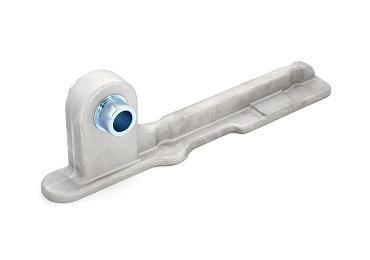
What gravity and low-pressure casting do well
Gravity casting in sand or permanent moulds needs cheap tooling and absorbs low volumes and large, simple parts well. Low-pressure die casting (LPDC) fills the mould from below through a riser tube at low pressure, so the metal enters calmly and pressure is held while it freezes; it is common for wheel-type and thick, round parts.
Both rely on feeding to control shrinkage. That is why generous sections and risers appear on the drawing, and why the finished part often weighs more than its function needs. We do not run sand, gravity or LPDC casting; this page is for buyers comparing those routes with squeeze casting. If an existing sand-cast part has porosity or leak problems, sand casting vs squeeze casting: porosity, leaks and conversion checks sets out what to check first.
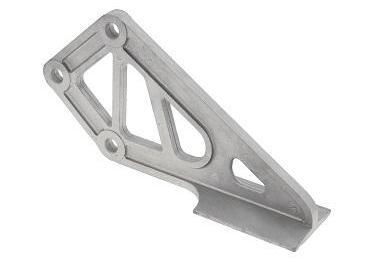
Squeeze casting vs gravity and low-pressure casting
A qualitative comparison for the review. Cycle time, machining stock and tooling cost are quoted per part, not taken from this table.
| Factor | Gravity / sand | Low-pressure die casting | Squeeze casting |
|---|---|---|---|
| How shrinkage is controlled | Risers and feeding | Pressure held from below during freezing | Direct pressure on the metal during solidification |
| Wall sections | Usually generous, set by feeding | Moderate | Can come down where pressure controls solidification; 4–15 mm in our range |
| Machining stock | Larger allowance on cast faces | Moderate | Near-net; functional faces machined |
| Tooling | Lowest (sand) to moderate (permanent mould) | Moderate | Steel die; treated as new tooling in a conversion |
| Best fit | Prototypes, low volume, large simple parts | Round, thick parts at medium volume | Sound, heat-treated A356-T6 parts at repeat volume |
What the conversion review must establish
| Review stage | Required comparison |
|---|---|
| Is soundness the real constraint? | A part rejected for shrinkage, or one that leaks after machining, is a candidate; a part that is merely expensive per piece may not be |
| Section reduction | Thinner walls are possible when pressure controls solidification; that is where weight and cost come out |
| Tooling change | Sand, permanent-mould or LPDC tooling does not transfer to a squeeze casting die |
| Volume threshold | Gravity casting handles low volume well, so the change needs volume or a defect that cannot be solved otherwise |
When to keep gravity or low-pressure casting
Keep them for prototypes, low volumes, large simple parts and applications where the mechanical requirement is modest and soundness has never been the problem. Squeeze casting is not cheaper per piece at low volume, where gravity tooling costs far less.
Questions engineers ask
- What is the difference between squeeze casting and gravity casting?
- Gravity casting fills the mould by gravity and solidifies at atmospheric pressure; squeeze casting fills at low velocity and solidifies under high pressure, which suppresses shrinkage and gas porosity and allows T6 heat treatment.
- Is low-pressure die casting the same as squeeze casting?
- No. LPDC fills the die from below at low pressure; squeeze casting applies a much higher pressure while the metal solidifies.
- Do you run gravity or LPDC casting?
- No. We run aluminum die casting, squeeze casting and zinc die casting. If gravity or LPDC is the better route for your part, we say so.
Send a drawing for a route review
Send a 2D drawing and, if available, a 3D model with the alloy, annual quantity, critical tolerances and any pressure or leak requirement. Howard Ding replies with the proposed route, open questions and the tests that apply.
What happens next
- Howard Ding confirms receipt and asks for anything missing from the package.
- Engineering reviews geometry, alloy and acceptance criteria and proposes a route: squeeze casting, die casting, or a reason neither fits.
- You receive the quotation with tooling, samples and validation listed separately from the part price.