
Casting capabilities and limits
Aluminum die casting, squeeze casting and zinc die casting, with tooling, T6 heat treatment, CNC machining, finishing and inspection in one plant in Qingdao. Screen your part against the envelope first.
Capability envelope
Screen your part against these limits before you send it. Clamping tonnage is a screening condition, not a specification: projected area, wall section, alloy and the required soundness also decide feasibility, so a part inside the envelope is still confirmed against the model and the annual quantity.
| Squeeze casting | Aluminum die casting | Zinc die casting | |
|---|---|---|---|
| Machines | 300–1,100 t | 160–1,100 t | In-house |
| Part weight | Reviewed per part against press size and envelope | ||
| Envelope | Up to about 1.2 × 0.8 m | ||
| Wall thickness | 4–15 mm | Thin walls; reviewed per part | Reviewed per part |
| As-cast blank tolerance | ±0.2 mm nominal; machined tolerances agreed per feature | ||
| Heat treatment | T6 in-house | Usually as-cast | As-cast |
| Usually chosen for | Pressure-tight, load-bearing, heat-treated or welded parts | Thin walls, complex geometry, higher volumes | Small, detailed parts with a good as-cast surface |
Where the range stops
Stating what we cannot do saves a review cycle at both ends. If your part needs one of these, we say so instead of quoting a route that does not fit.
- Parts beyond about 1.2 × 0.8 m, or too heavy for our largest press
- Parts needing more than 1,100 t of clamping force
- Aerospace, medical, food-contact and pressure-vessel applications
- Gravity, sand and investment casting, forging, additive manufacturing
- Product design responsibility: IATF 16949 is held with clause 8.3 excluded
Equipment in the plant
| Area | Equipment |
|---|---|
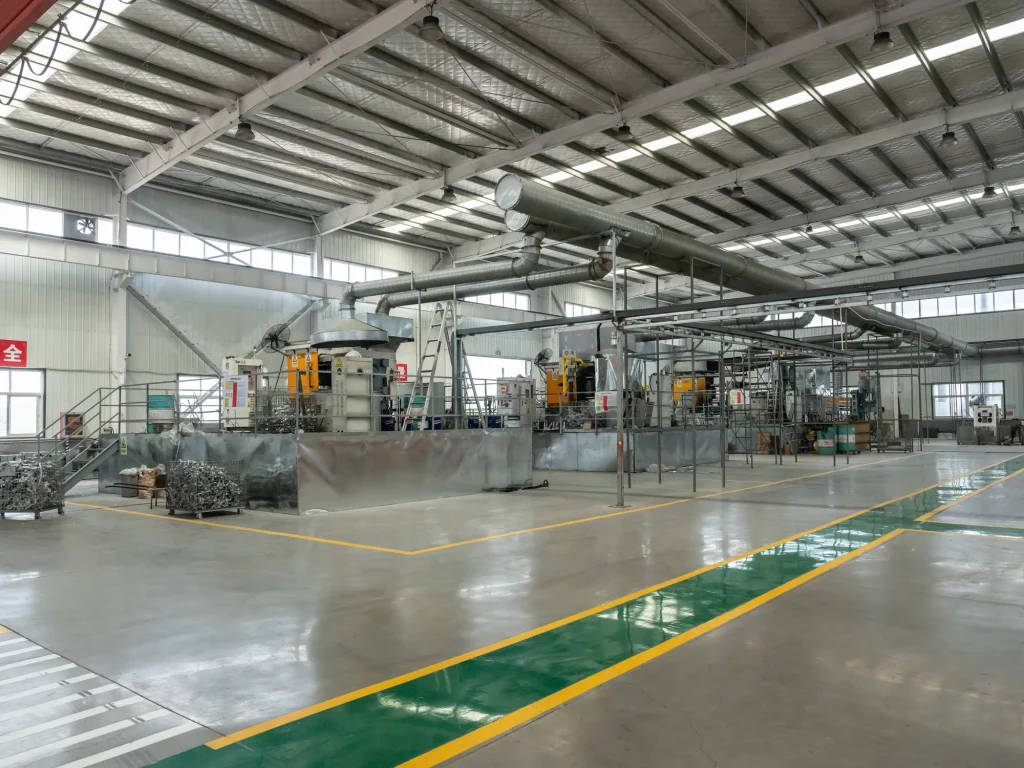
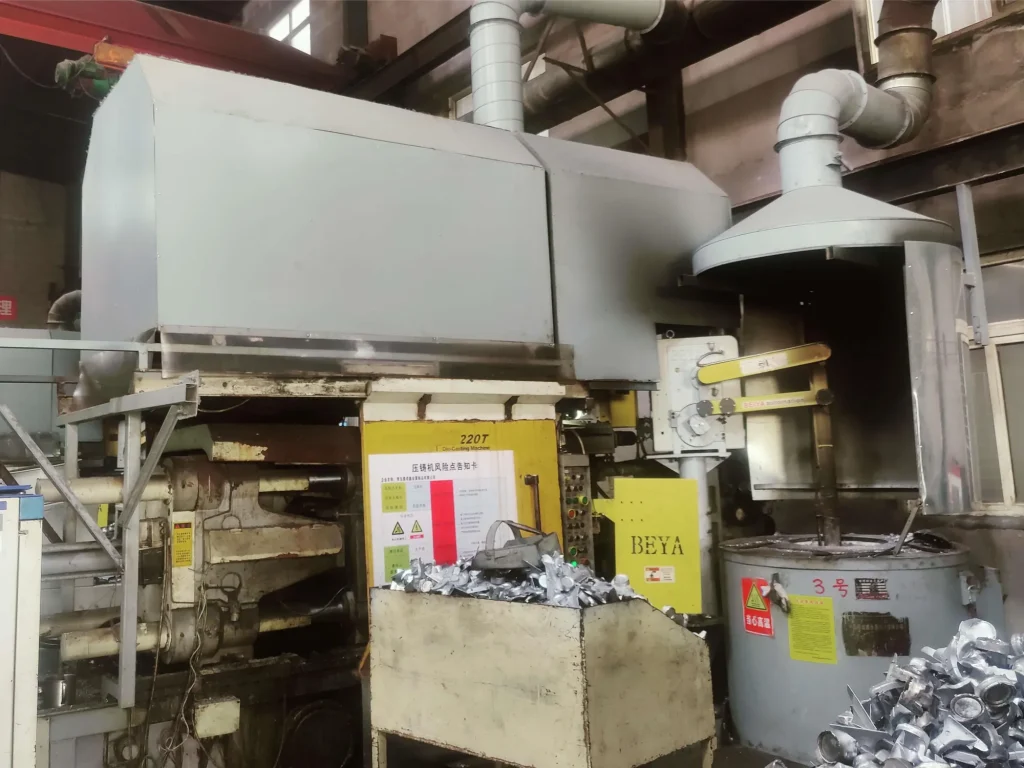
| Casting | 7 aluminum casting machines (die casting 160–1,100 t, squeeze casting 300–1,100 t), automatic robotic-arm extraction, centralised melting |
| Tooling | In-house tool design and build |
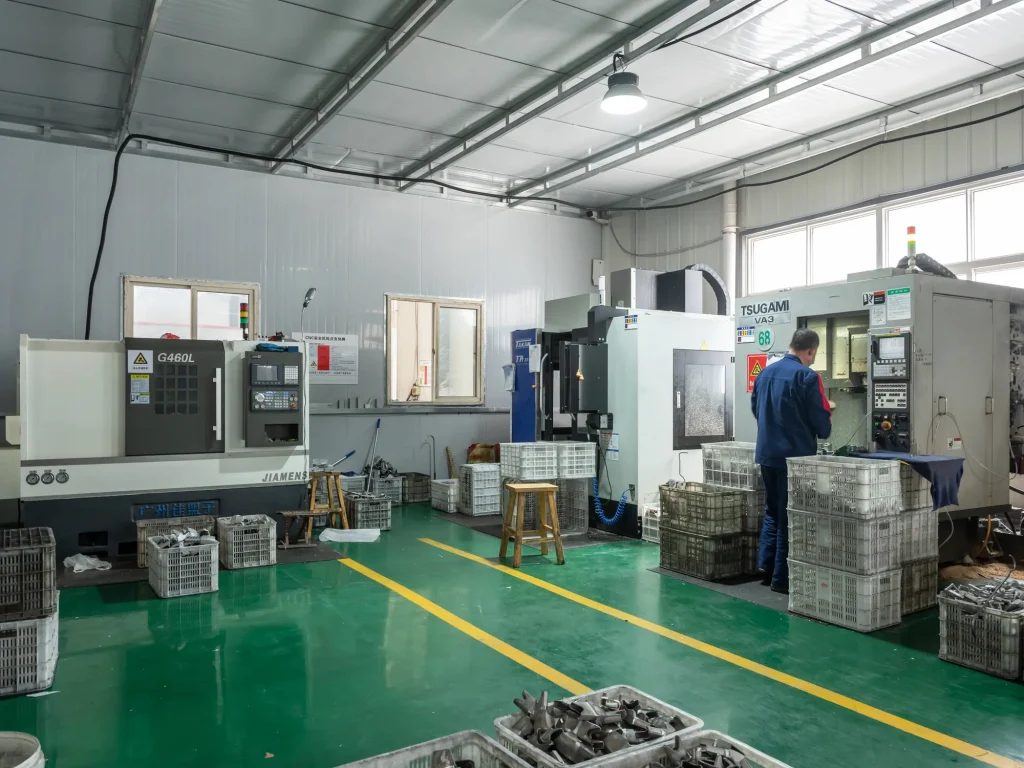
| Machining | Horizontal and gantry machining centres, vertical machining centres, CNC lathes, a vertical lathe, EDM |
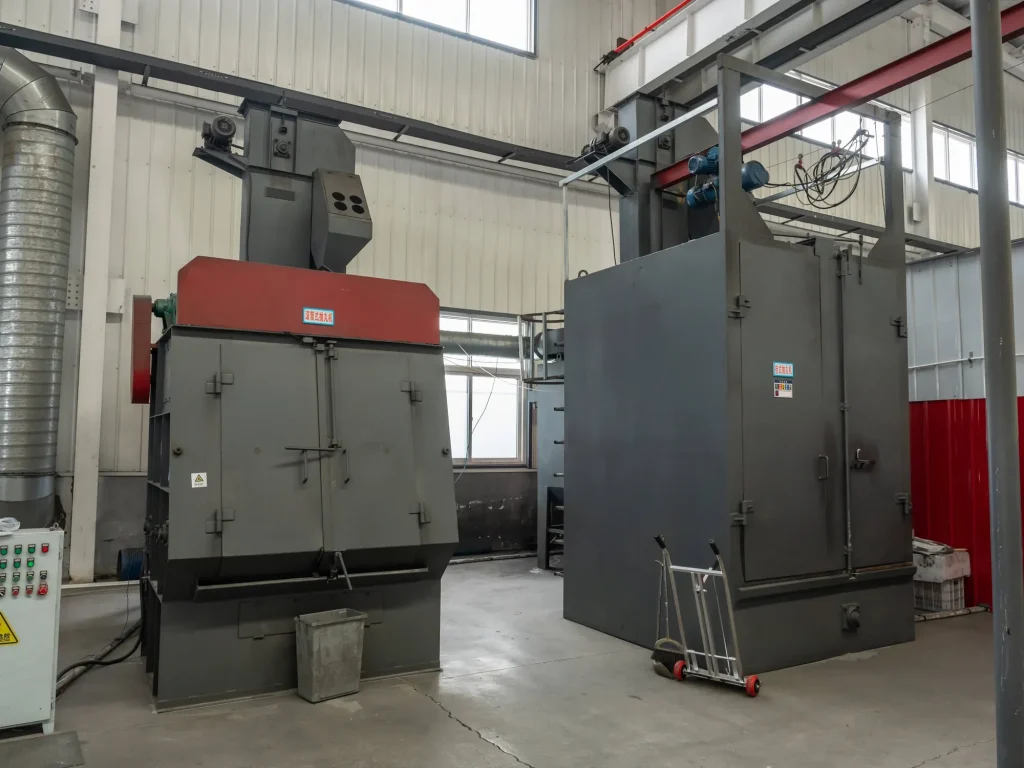
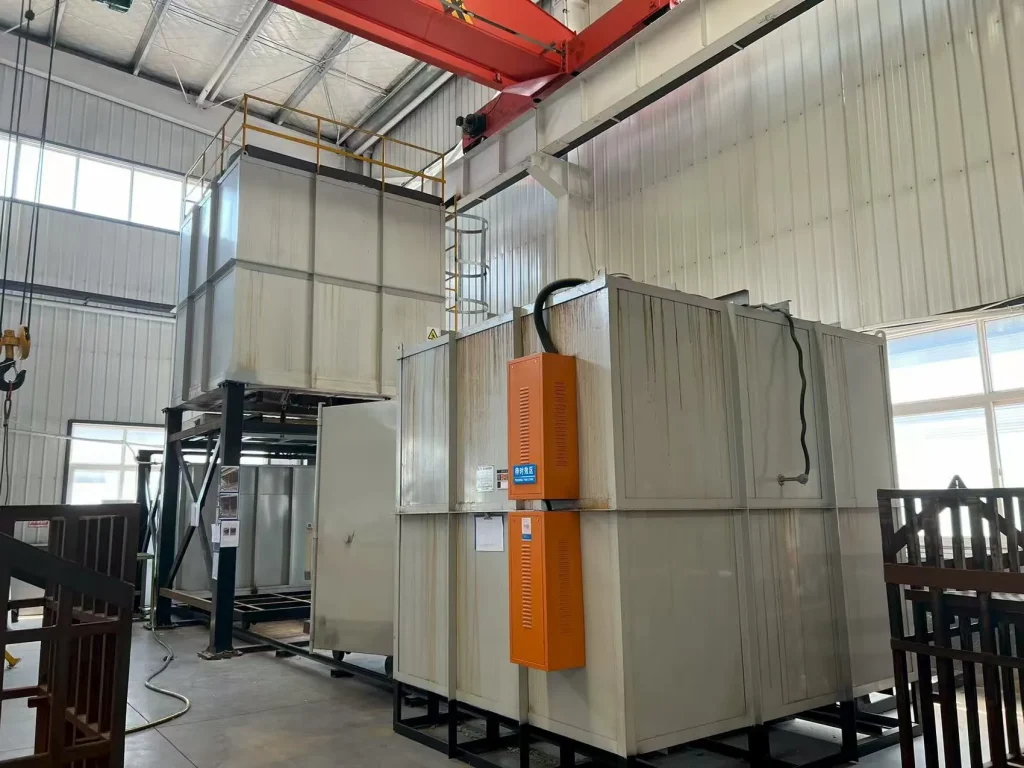
| Heat treatment and finishing | Heat treatment, tumbling and hanging shot blasting, sandblasting, 2 vibration tumblers, surface grinding, 2 grinding and polishing machines, ultrasonic cleaning |
| Inspection | Automatic CMM, video measuring, spectrometer, tensile and hardness testing, X-ray, helium leak detection, water immersion |
What is delivered with the casting
- DFM review and tooling
Tool design, build and trial with agreed sample criteria.
- Casting and heat treatment
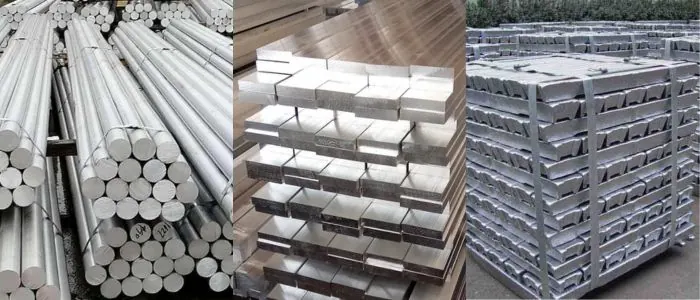
Melt verified by spectrometer; T6 planned with machining.
- Machining
Bores, threads and sealing faces to the accepted revision.
- Finishing
Appearance, protection and masked sealing faces.
- Inspection and records
The checks agreed in the inspection plan.
- Assembly and packing
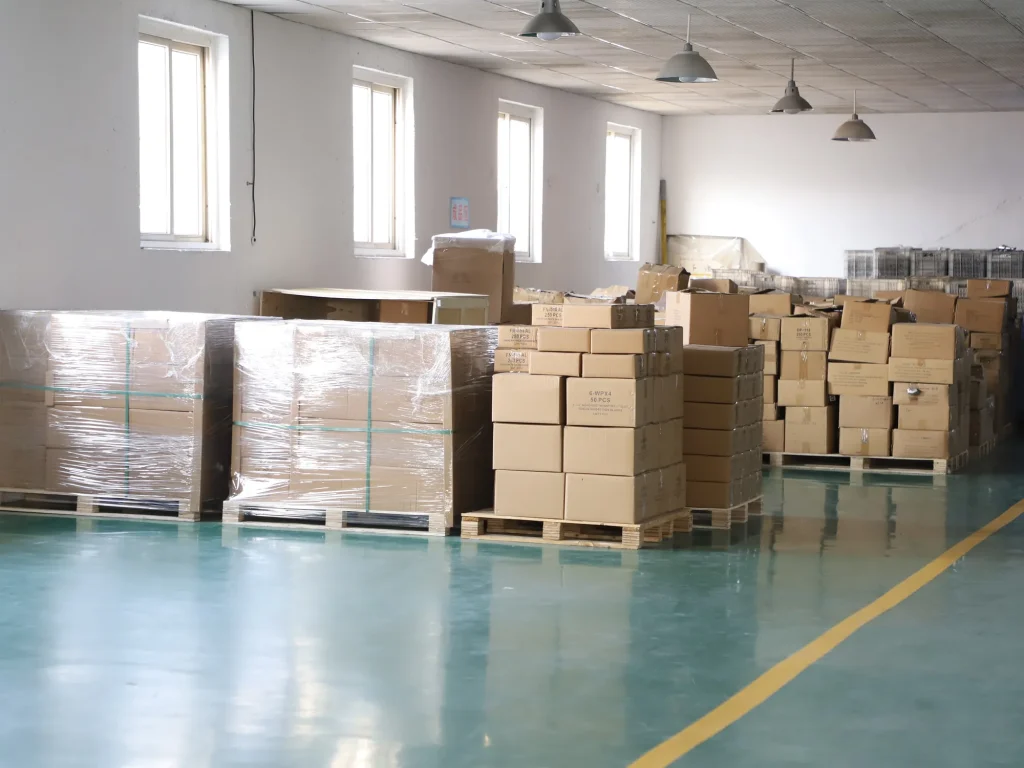
Where specified, then shipment.
Which route for which part
Most parts reach us as a drawing without a fixed process. The table shows where engineering starts the review. The final route is confirmed against the model, the alloy and the annual quantity.
| Requirement | Usual first route | Why | Reference page |
|---|---|---|---|
| Complex housing at repeat volume | Aluminum die casting | Thin walls and complex geometry; usually used as-cast | Motor housing castings |
| Internal soundness, T6 or specified properties | A356-T6 squeeze casting | Walls of 4–15 mm, T6 in-house, properties stated per section | A356-T6 squeeze casting |
| Sealed part with an agreed leak rate | Either route, decided at drawing review | The leak criterion, X-ray zones and machined faces set the route | Leak-tested die castings |
| Bracket that carries load or is welded | Squeeze casting | T6 response and weldability | Automotive structural castings |
| Replacing a forging or billet part | Squeeze casting, reviewed against the original | Reviewed against the original drawing and properties | Forging to casting conversion |
Alloys by route
Name the alloy and the governing standard on the drawing. If the alloy is open, describe the service conditions and engineering proposes one with the reason.
| Route | Alloys | Heat treatment |
|---|---|---|
| Squeeze casting | A356 / A356.2, A380, A383, AlSi9Mg, AlSi10Mg, AlSi9Cu3 | T6 in-house where the alloy responds to it |
| Aluminum die casting | Common die casting alloys such as A380, AlSi9Cu3 and ADC12 | Usually as-cast |
| Zinc die casting | Reviewed per drawing | As-cast |
Alloy selection for pressure-tight castings A356 composition and A356-T6 properties
Process history and site
- Aluminum die casting since 1995 (company-reported)
- Squeeze casting developed in-house since 2015 (company-reported)
- Three manufacturing bases in Jimo District, Qingdao
- 7 aluminum casting machines: die casting 160–1,100 t, squeeze casting 300–1,100 t
- The motor housings pictured on this site are high-pressure die cast
Factory visits and live video audits of the casting, machining and inspection areas can be arranged before an order. About the factory · Certificates and scope
Screen a drawing in five checks
- Does the part fit inside about 1.2 × 0.8 m?
- Is the clamping force needed at or below 1,100 t?
- For squeeze casting: are the main walls within 4–15 mm?
- Is ±0.2 mm on the as-cast blank enough, with tighter limits only on machined features?
- Is the application outside aerospace, medical, food-contact and pressure-vessel use?
If any answer is no, send the drawing anyway. You get a written answer on what does not fit. RFQ checklist Send your drawing for a quote
Questions about capabilities
- What size of part can you cast?
- Within an envelope of about 1.2 × 0.8 m, with part weight reviewed per drawing, on die casting machines of 160–1,100 t and squeeze casting machines of 300–1,100 t.
- Which casting processes do you not offer?
- Gravity, sand and investment casting, forging and additive manufacturing. We also do not quote aerospace, medical, food-contact or pressure-vessel parts.
- What tolerance does a casting hold?
- The as-cast blank is quoted to ±0.2 mm nominal; machined tolerances are agreed per feature.
- Is everything done in one plant?
- Tooling, melting, casting, T6 heat treatment, CNC machining, finishing and inspection are in-house in Qingdao. Finishes not done in-house are agreed per project.
- How long have you run die casting and squeeze casting?
- Aluminum die casting since 1995 and squeeze casting developed in-house since 2015, both company-reported.
- Are motor housings die cast or squeeze cast?
- The motor housings pictured on this site are high-pressure die cast. Squeeze casting enters the review when internal integrity, T6 or specified properties drive the decision.
- Can we audit the factory before ordering?
- Yes. Factory visits and live video audits of the casting, machining and inspection areas can be arranged on request.
Check your part against the envelope
Send the drawing with weight, size and annual quantity. Howard Ding confirms feasibility and the route.
What happens next
- Howard Ding confirms receipt and asks for anything missing from the package.
- Engineering reviews geometry, alloy and acceptance criteria and proposes a route: squeeze casting, die casting, or a reason neither fits.
- You receive the quotation with tooling, samples and validation listed separately from the part price.