
Cast and machined aluminum parts
Die-cast and squeeze-cast parts finished on our own CNC machines, so casting stock, fixtures, datums and the final CMM check are planned together in one plant.
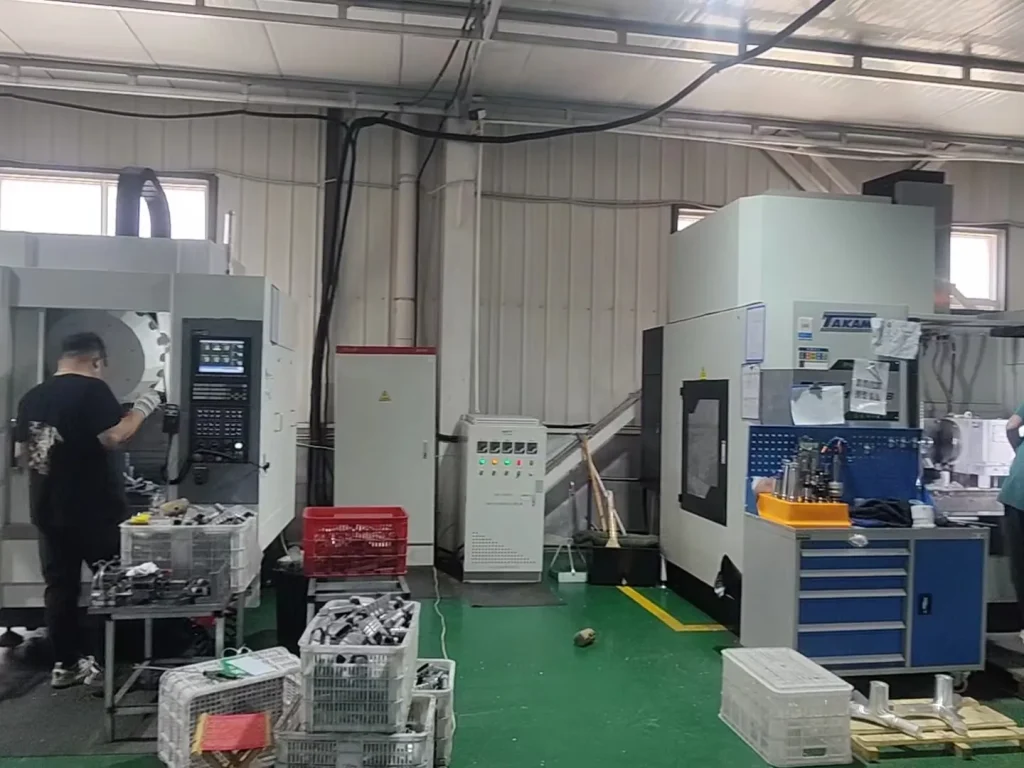
Casting and machining under one roof
Machining is where a casting becomes a component: bores, threads, sealing faces and datums. We machine our own castings on in-house CNC machines, so the cast blank, the machining stock and the fixture are planned together, and a deviation is traced inside one plant instead of between two suppliers.
The as-cast blank is quoted to ±0.2 mm nominal. Anything tighter is produced by machining after casting, agreed per feature against the datums, material and geometry.
| Horizontal machining centres | In-house, incl. a double-station machine |
|---|---|
| Gantry machining centres | In-house, incl. side milling heads |
| Vertical machining centres | In-house |
| CNC lathes | In-house |
| Vertical lathe | In-house |
| EDM machines | In-house |
Features to define before production
A solid model communicates geometry. Thread class, blind-hole depth, surface texture, edge condition and permissible tool marks belong on a revision-controlled drawing.
| Feature | Define on the drawing | Why it matters on a casting |
|---|---|---|
| Bores and fits | Nominal, tolerance, form, mating part | Stock must clean up the cast surface without breaking into porosity |
| Threads | Standard, size, depth, verification | Tapped holes near thick sections can open shrinkage |
| Sealing faces | Flatness, roughness, allowable defects, mating seal | The face is where a leak test is clamped and where the part seals in service |
| Datums | Datum scheme and critical characteristics | The first operation locates on cast surfaces; later operations on machined ones |
| Coated surfaces | Dimensions before or after coating; masking | A report on an uncoated bore does not answer a requirement after coating |
Sequence operations around the final condition
1. Datum transition
Locate the casting on agreed cast surfaces in the first fixture, then move to machined datums. The fixture is designed with the tool, so production datum and inspection datum match.
2. Heat treatment first
T6 is in-house and scheduled before finish machining of critical bores and faces, so final dimensions are checked in the delivered condition.
3. Finish, then final check
Coating, masking and the final dimensional check on a CMM. Machining can reveal internal discontinuities; where that would affect sealing, the casting route and acceptance are agreed first.
Questions about machining
- What machining equipment do you have?
- Horizontal machining centres (including a double-station machine), gantry machining centres (some with side milling heads), vertical machining centres, CNC lathes, a vertical lathe and EDM machines, all in-house.
- What tolerance can a cast and machined part hold?
- The as-cast blank is quoted to ±0.2 mm nominal. Tighter features are machined and agreed per feature against the datums, material and geometry.
- Do you machine before or after heat treatment?
- Critical bores and faces are finish machined after T6, so final dimensions are checked in the delivered condition. The sequence is agreed with the drawing.
Send the finished-part drawing
Mark machined surfaces, datums, threads and sealing faces. Howard Ding replies with the casting and machining plan.
What happens next
- Howard Ding confirms receipt and asks for anything missing from the package.
- Engineering reviews geometry, alloy and acceptance criteria and proposes a route: squeeze casting, die casting, or a reason neither fits.
- You receive the quotation with tooling, samples and validation listed separately from the part price.