

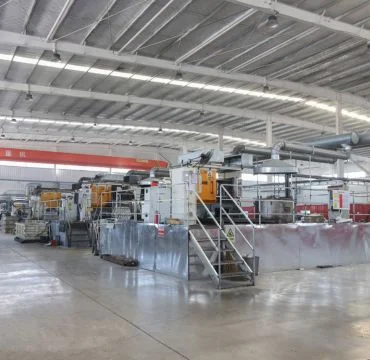
Squeeze casting solidifies metal under applied pressure. Evaluate it for aluminum parts where internal integrity, heat treatment or mechanical requirements influence the process choice; validate the finished component against a written specification.
What is squeeze casting?
Squeeze casting is a process in which molten aluminum solidifies under applied pressure in a metal die. CEX uses this route for components where internal integrity and mechanical performance are important. It can be evaluated alongside conventional die casting, machining from solid stock or forging.
A starting point for the engineering conversation
| Parameter | Published CEX capability |
|---|---|
| Squeeze casting equipment | 300–1,100 tonnes |
| Materials listed | A356 / A356.2, A380, A383, AlSi9Mg, AlSi10Mg, AlSi9Cu3 |
| Part weight range | 50 g–20 kg |
| Maximum part envelope | Up to 1.2 × 0.8 m |
| Wall thickness range | 4–15 mm |
Strength, heat treatment and pressure tightness
For suitable alloys, squeeze casting can be combined with T6 heat treatment. CEX publishes example tensile-strength values of 260–320 MPa and yield-strength values of 220–260 MPa. These are reference values, not acceptance criteria for an unreviewed component.
Specify the alloy, heat treatment, test location, test method and required minimum properties. Confirm pressure and leak-rate acceptance criteria separately when sealing is critical.
Assessing a process conversion
Consider the whole finished-part route: tooling investment, casting yield, machining operations, inspection, volume and required performance. The relevant comparison is total cost and conformity of the finished part, rather than casting price alone.
Explore Application Examples
Prepare your project for review
Share a drawing, material specification, estimated quantity and the characteristics that are critical to the application. If the process is not yet selected, choose “Help me choose” in the inquiry form.
What should I include in a request for quotation?
Send a 2D drawing and, if available, a 3D model. Include material, annual quantity, critical tolerances, surface finish, inspection requirements and target timing. If a specification is still open, tell us what the component needs to do.
Can you supply machined and finished castings?
CEX provides tooling, casting, CNC machining and surface finishing. Define your finished-part requirements so the casting, machining allowance and final inspection can be planned together.
From specification to production
Before changing from forging
Compare finished geometry, load cases and test requirements. A tensile value alone does not demonstrate equivalent fatigue performance or assembly behavior.
Before changing from conventional die casting
Identify the actual rejection mode: a leak, exposed discontinuity after machining, or a mechanical test failure. Use the same acceptance criteria to evaluate sample parts from the alternative process.
Before specifying T6
Confirm the alloy designation and property requirements, including where a test specimen is taken. Plan the machining sequence and dimensional checks around heat treatment.
Questions for this process
Does squeeze casting guarantee zero porosity?
No blanket defect-free guarantee is appropriate. Agree the regions to inspect, test sensitivity, discontinuity limits and any leak-rate requirement for the actual part.
Can it directly replace a forged or steel component?
A conversion requires design and material review. Compare stiffness, strength, durability, interfaces and operating conditions; approve the replacement only after the agreed validation.