
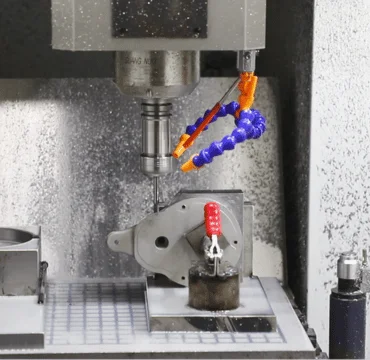
CNC machining establishes the functional dimensions of a cast component. A useful quotation needs the cast geometry, finished drawing and datum scheme, with dimensions identified as before or after surface treatment.
Turn a casting into a functional component
CNC machining creates the finished interfaces a casting needs for assembly. CEX combines casting and machining so that tool design, datum selection and machining allowance can be considered together.
| Feature | Define before production |
|---|---|
| Bores and fits | Nominal dimensions, tolerances and mating components |
| Threads | Thread standard, size, depth and verification |
| Sealing faces | Flatness, surface roughness and allowable defects |
| Inspection | Datum scheme and agreed critical characteristics |
A drawing is the source of truth
Provide a revision-controlled 2D drawing alongside the 3D model. Flag dimensions that control fit, motion, sealing or interchangeability. Specify whether dimensions apply before or after coating.
Casting integrity still matters
Machining may reveal internal discontinuities below the as-cast surface. If this could affect sealing or durability, discuss the casting route and verification plan before machining begins.
Prepare your project for review
Share a drawing, material specification, estimated quantity and the characteristics that are critical to the application. If the process is not yet selected, choose “Help me choose” in the inquiry form.
What should I include in a request for quotation?
Send a 2D drawing and, if available, a 3D model. Include material, annual quantity, critical tolerances, surface finish, inspection requirements and target timing. If a specification is still open, tell us what the component needs to do.
Can you supply machined and finished castings?
CEX provides tooling, casting, CNC machining and surface finishing. Define your finished-part requirements so the casting, machining allowance and final inspection can be planned together.
From specification to production
Establish a stable datum scheme
Identify the assembly references and how the casting will be located in a fixture. Where a cast surface is used initially, discuss the transition to machined datums for subsequent operations.
Sequence operations around the final condition
State heat treatment, finishing, inserts and any assembly operations. Define when final dimensions are checked, particularly where coating or thermal processing can affect fit.
Control the features a model cannot explain
Specify thread class, blind-hole depth, surface texture, edge conditions and permissible tool marks on the drawing. A nominal solid model does not communicate these acceptance details.
Questions for this process
Can a 3D model replace a drawing?
A model is useful for geometry, but the acceptance requirements still need to be explicit. Supply a controlled drawing or an agreed model-based definition containing tolerances, datums and notes.
How should machined sealing faces be specified?
Include flatness, roughness and the mating seal information, together with the leak test where needed. Identify whether inspection occurs before or after coating and assembly.