

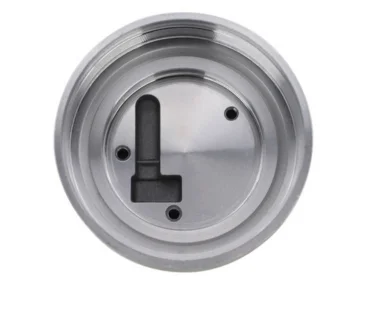
Machinery castings must be evaluated as part of the working assembly. Share the mounting arrangement, loads, vibration, duty cycle and maintenance environment along with the part drawing.
Cast components for industrial machinery
| Application focus | Requirements to provide | Engineering review |
|---|---|---|
| Bearing and gearbox housings | Shaft alignment, bearing fits and mounting stiffness | Identify the datums controlling the assembled axis and the dimensions requiring final machining. |
| Covers and machine enclosures | Fastener locations, gasket compression and access requirements | Separate cosmetic surfaces from sealing interfaces; specify edge condition and coating exclusions. |
| Brackets and equipment mounts | Load paths, mounting torque and operating cycles | Agree the part-level validation and check whether the geometry can be adjusted before selecting a casting route. |
Plan around the complete assembly
Include replacement-part requirements and expected reorder quantities. A stable drawing revision, controlled tool changes and repeatable inspection references help maintain interchangeability across later orders.
Build the manufacturing route
Review die casting against the geometry and demand. Where heat treatment or internal integrity drives the decision, compare squeeze casting. Identify finished features for CNC machining and agree the final inspection condition.
Prepare an application-specific RFQ
Send the drawing and model, material specification, initial and annual quantities, and the operating requirements above. Identify open questions and distinguish mandatory acceptance criteria from preferred features. Include target sample and production dates so approval steps can be planned.
Common application questions
What information matters for a replacement component?
Provide the current drawing revision, mating dimensions, service history and any known failure mode. A worn sample alone may not represent the original dimensions.
Should a prototype use the production casting process?
Match the prototype route to the purpose of the test. A machined prototype may support a fit review but does not establish production casting integrity or material performance.